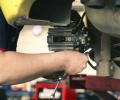
There are 230 million vehicles on the road, and counting. Bulk of these are under seven years old and once they get older, the industry estimates the requirement for spare parts and aftersales service to shoot up sharply.
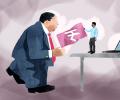
The headline for corporate profit growth has been very encouraging in the July-September quarter (Q2) of 2023-24 (FY24), with the combined net profit of listed companies up by 38 per cent year-on-year. However, the earnings distribution has been very lopsided, with most of the growth coming from public-sector oil-marketing companies (OMCs), banks, non-bank lenders, automobile (auto) companies, and cement producers. By comparison, companies from information technology services, fast-moving consumer goods (FMCG), retail, and consumer durables were disappointed, experiencing a sharp slowdown in net sales growth and a relatively muted increase in reported net profit.

Auto firms have reported a good jump in sales for the month of December

The Jats, who went on a rampage to demand quota, attacked the showrooms of only non-Jats.


The company said its net sales during the quarter under review stood at Rs 5,061.49 crore (Rs 50.61 billion) as against Rs 4,817.07 crore (Rs 48.17 billion) in the same quarter last fiscal, up 5.07 per cent.

The country's largest auto company reported a total sales of 75,775 units across its various international operations, which include Tata Motors, Tata Daewoo and the Hispano Carrocera range of commercial vehicles, Tata passenger vehicles and the British marquee brands Jaguar Land Rover.
Tax concessions in Uttarakhand are encouraging auto majors from Hero Honda to Tata Motors to shift a larger part of their manufacturing to the state to counter rising raw material costs and increase their flexibility to offer consumers cheaper models in a competitive market.

Close to 60 per cent models that Kia sells in India are top trims of the models. In line with its global strategy, the India arm of South Korean major Kia has dropped 'Motors' from its name. This is to reflect the transition from an automaker to a provider of advanced and eco-friendly mobility solutions, the company said. With a new brand identity and slogan, the fourth-largest car maker in India by sales aims to accelerate growth and strengthen its premium positioning.
The cutback in production has been announced on top of three days' production halt this month and would impact most of Toyota's models made in Japan, excluding those outsourced to subcontractors, the report revealed. Further, sales of new vehicles in Japan slumped to the lowest level in three decades in 2008 as recession hit Asia's biggest economy, piling pressure on its auto giants, an industry group had said.

From its lows this month, the stock of Sona BLW Precision Forgings is up 10 per cent on better-than-expected results. The stock rose by 4 per cent in the trading session on Tuesday after Japan's Nikkei Group said the Indian automotive component major has topped its rankings in terms of competitive advantage. The rankings are based on sales, profit margin, capital expenditure, research and development, and market capitalisation.
Led by market leader Hero Honda, two-wheeler manufacturers posted an impressive growth in sales during the month of November on the back of favourable bank lending rates and a good response to new launches. Heavy promotional campaigns and sales offers by most companies also aided demand.

Despite the surge in automobile sales in recent months and new vehicle development programmes of car makers, auto component makers are wary of committing further investments in building new capacities. They have adopted a wait-and-watch attitude to see if the demand sustains.

It said total passenger vehicles sales were 45,380 units, in January 2010, a growth of 76 per cent from the corresponding month last year.
India's car market leader Maruti Suzuki India unveiled two concept models - sedan Ciaz and crossover SX4 S-Cross - as it looks to enhance its position in the bigger sedan segment going forward.
GM Chairman and Chief Executive Rick Wagoner is scheduled to outline the plan to employees, the Wall Street Journal reported. "This is real, hard stuff," one person briefed on the plan told the paper. "It not only assures our survival, but will make us a radically leaner, more focused company with much lower fixed cost."

Contrary to expectations that car sales dip in December, auto majors Maruti Suzuki and Hyundai Motor India are poised to grow 30 per cent in sales (the two companies control 72 per cent of the domestic market). General Motors is looking at 70-80 per cent increase in sales.

If Tesla comes in, India's position as a manufacturing hub will rise many notches, as it will become only the second country, after China, to have both Apple as well as Tesla.

Prices of automobiles, including cars, sports utility vehicles and two-wheelers, are set to come down with Finance Minister P Chidambaram announcing a reduction in excise duty in the Interim Budget.
The Indian auto industry witnessed contrasting fortunes in the domestic sales of cars and motorcycles in August with the former continuing in the double digit growth path, while bikes slowed down to just 3.43 per cent.
The auto industry is on a roll with the sales of passenger cars showing robust growth in November this year as against the sales of last November.

GST will yield 'better value for money' for car buyers, increasing automobile industry demand, says Sandip Neogi.

India can become the number one automotive manufacturing hub in the world within five years, but auto companies need to enhance safety features to reduce deaths due to road accidents, Union Minister Nitin Gadkari said on Thursday. In his inaugural address at the Auto Expo 2023 here, the minister for road transport and highways asserted that the government's target is to reduce these accidents by 50 per cent before the end of 2024 while asking the auto industry to take suo moto action for road safety as the government doesn't want to make anything mandatory. Gadkari's sentiments were also echoed by Minister of Heavy Industries Mahendra Nath Pandey, who lamented that while India has only 1 per cent of the total overall vehicles, the country accounts for 11 per cent of the total global deaths due to road accidents.

Macroeconomic data announcement, Omicron situation and global trends will be the major driving factors for the equity market in the first week of the new year 2022, according to analysts. In what turned out to be a historic year, the Indian stock indices went past multiple milestones and the 30-share Sensex made an annual gain of 10,502.49 points or 21.99 per cent in 2021. Religare Broking Vice-President (Research) Ajit Mishra said, "This week marks the beginning of a new month and participants will be closely eyeing some crucial high-frequency data like monthly auto sales, India manufacturing PMI and India services PMI. "Besides, updates on the COVID-19 situation and performance of global markets will also be critical."
Vehicle sales across categories registered an increase of 4.99 per cent to 15,23,693 units from 14,51,263 units in February 2013.

Bollywood has always had a special fascination with wheels, be in motorcycles or cars. So it was no wonder that a special enclave was created at the ongoing Auto Expo 2016 in Greater Noida to tip the hat to the iconic films where the automobile played a critical part.

The performance of the auto component industry was impacted by moderation of vehicle sales in India in 2011-12.

Even as India overtakes Japan in automotive sales in 2022, moving to third place for the first time, oddly enough the country's biggest motor show is going to see some big hitters give it a clear miss. Some prominent automotive brands have cited high event costs, negligible returns on investment, poor event management, and unfavourable location as reasons for their reluctance to participate. Major pure-play electric two-wheelers, too, are riding past this year's edition of the Auto Expo.
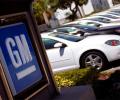
The move marks the entry of GWM, one of the largest manufacturers of sport utility vehicles (SUVs) and pick-ups, into the Indian market and a complete exit for GM from the country, two years after it stopped selling cars here.

'Right now, we are increasing production in anticipation of the demand during the festive season.' 'If the demand doesn't come back, all the production will languish in the factories.'

Weak consumer sentiment across urban and rural markets due to slow farm inflows, subdued agri-commodity prices, rising cost of ownership as a result of regulatory changes including safety, emissions, vehicle registration, along with a rise in interest cost/EMI, have impacted demand.

Close to 50 models were launched in India in the past 12 months, but companies have not been able to realise their potential due to the pandemic.

Rita Mozumdar argues small vehicles have not passed the frontal impact test as required under the law
Domestic car sales went up by 15.89 per cent during December 2002 as auto-makers like Maruti, Hyundai, Tata Engineering and Honda witnessed increased demand during the month.

Maruti Suzuki, Hyundai and M&M draw visitors with a range of concept cars.

Titan surged 2.98 per cent, followed by IndusInd Bank, ITC, JSW Steel, Infosys, Tech Mahindra, Tata Consultancy Services and Maruti. Hindustan Unilever, Asian Paints, Bharti Airtel and HDFC Bank were among the laggards.

Investor sentiment got a big push after Brent crude, the international benchmark, dropped below the $73-mark to quote at a seven-month low of $72.65
.jpg)
According to industry body Society of Indian Automobile Manufacturers and Automotive Component Manufacturers Association of India, with demand continuing to be low and factories not operating at full scale, this may lead to temporary excess overheads.
Home grown auto major Tata Motors on Friday reported a 45 per cent jump in total vehicle sales at 44,357 units in May this year as against 30,593 units in the same month last year.
